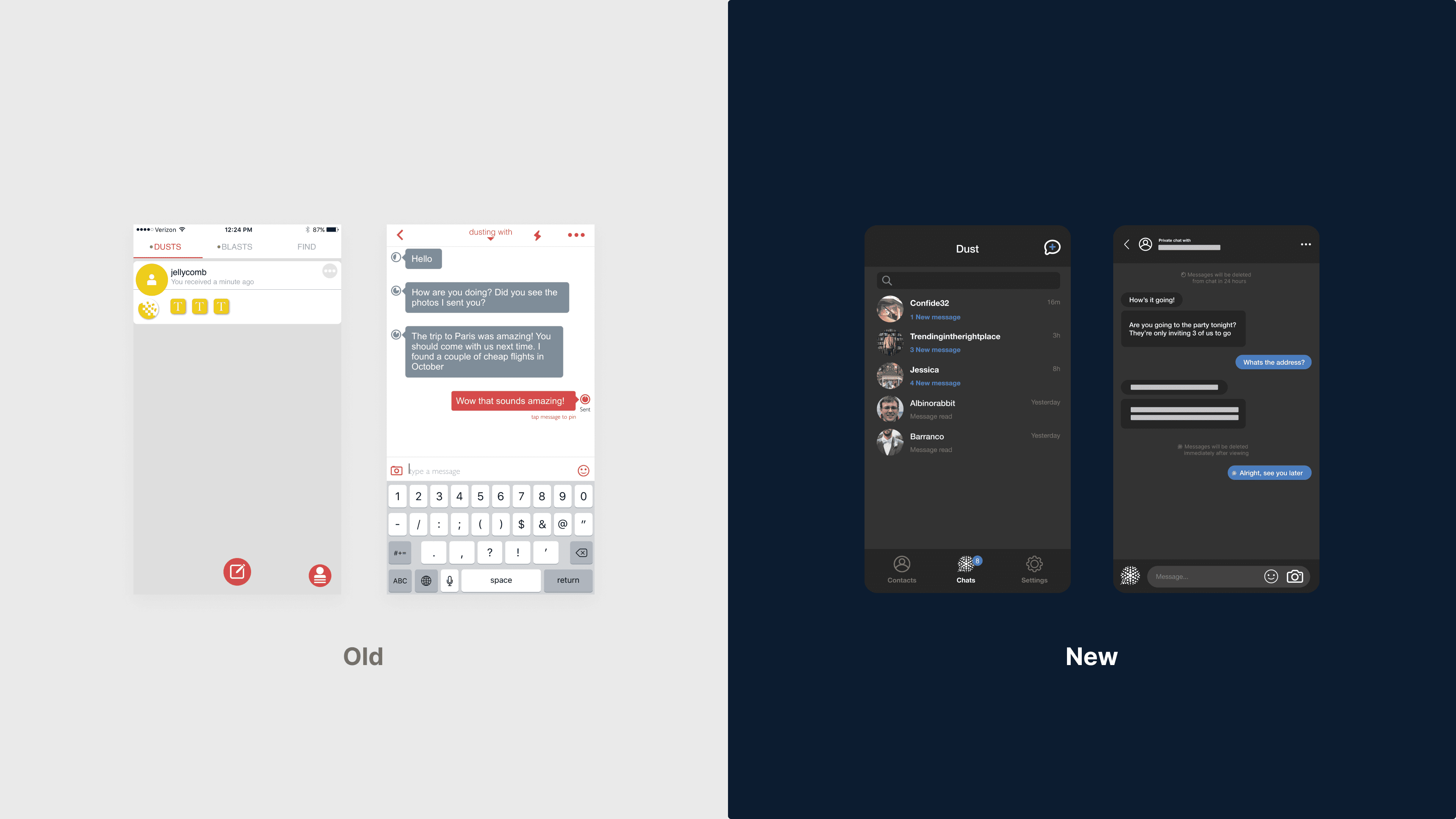
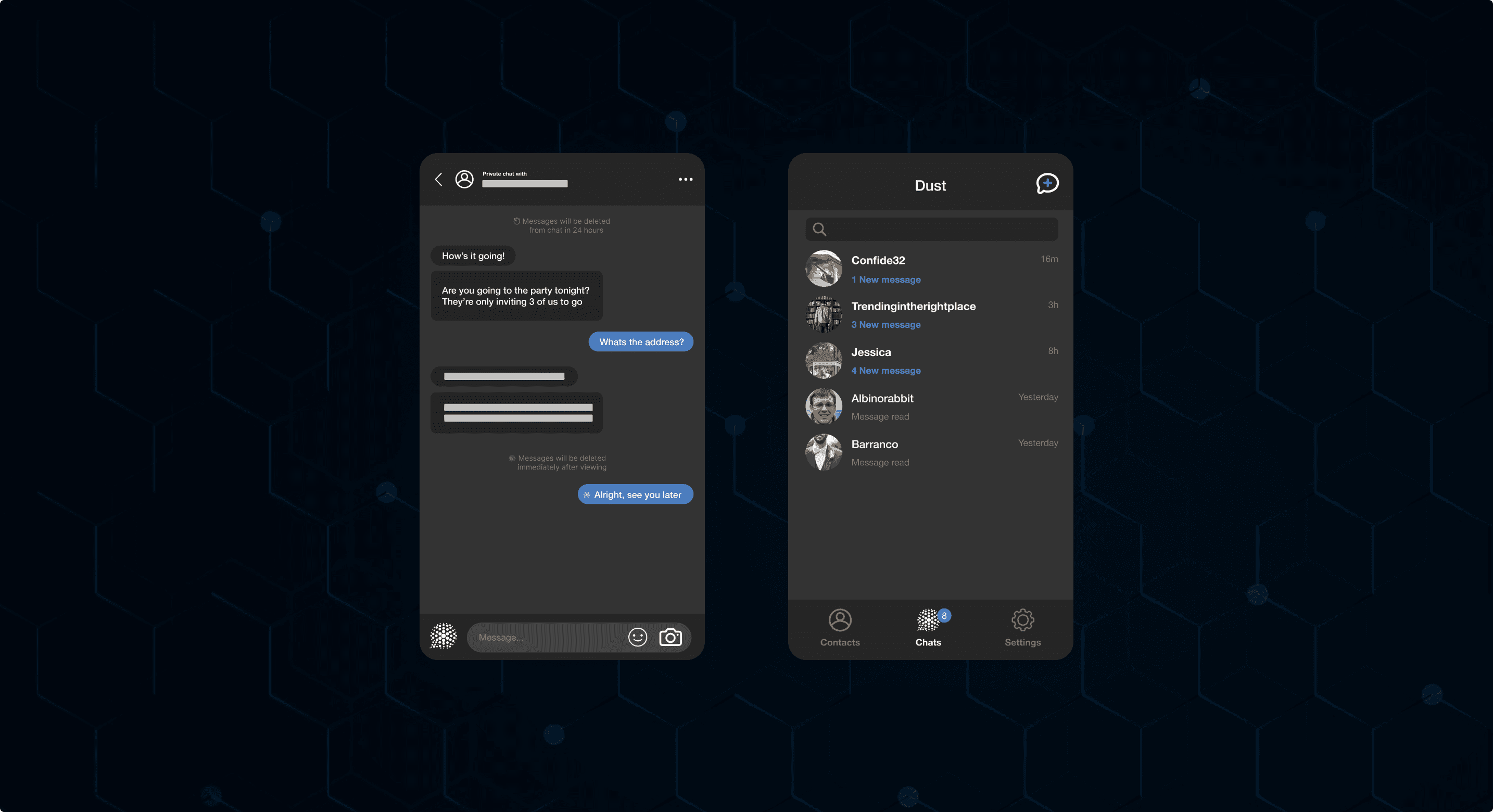
Dust is a private messaging app designed around secure communication, allowing people to send messages, photos, and other sensitive information.
As the first product designer on the team, I led the mobile app redesign, using user feedback and product data to identify usability issues, prioritize improvements, and simplify the experience around its core purpose: sending messages securely and easily.

We started by speaking directly with users to understand how they used Dust, what they valued about the product, and where they encountered friction. Our research revealed that the app had accumulated features that extended beyond its core purpose of private messaging. Alongside messaging, users could post content to followers, discover and follow other people and businesses, and interact with a growing set of social features.
While these features expanded what Dust could do, they also introduced clutter and competing priorities. The experience was becoming harder to navigate, and the core messaging experience was no longer as prominent as it should be. This led us to a broader question: How could we simplify Dust and refocus the product around what made it valuable in the first place?
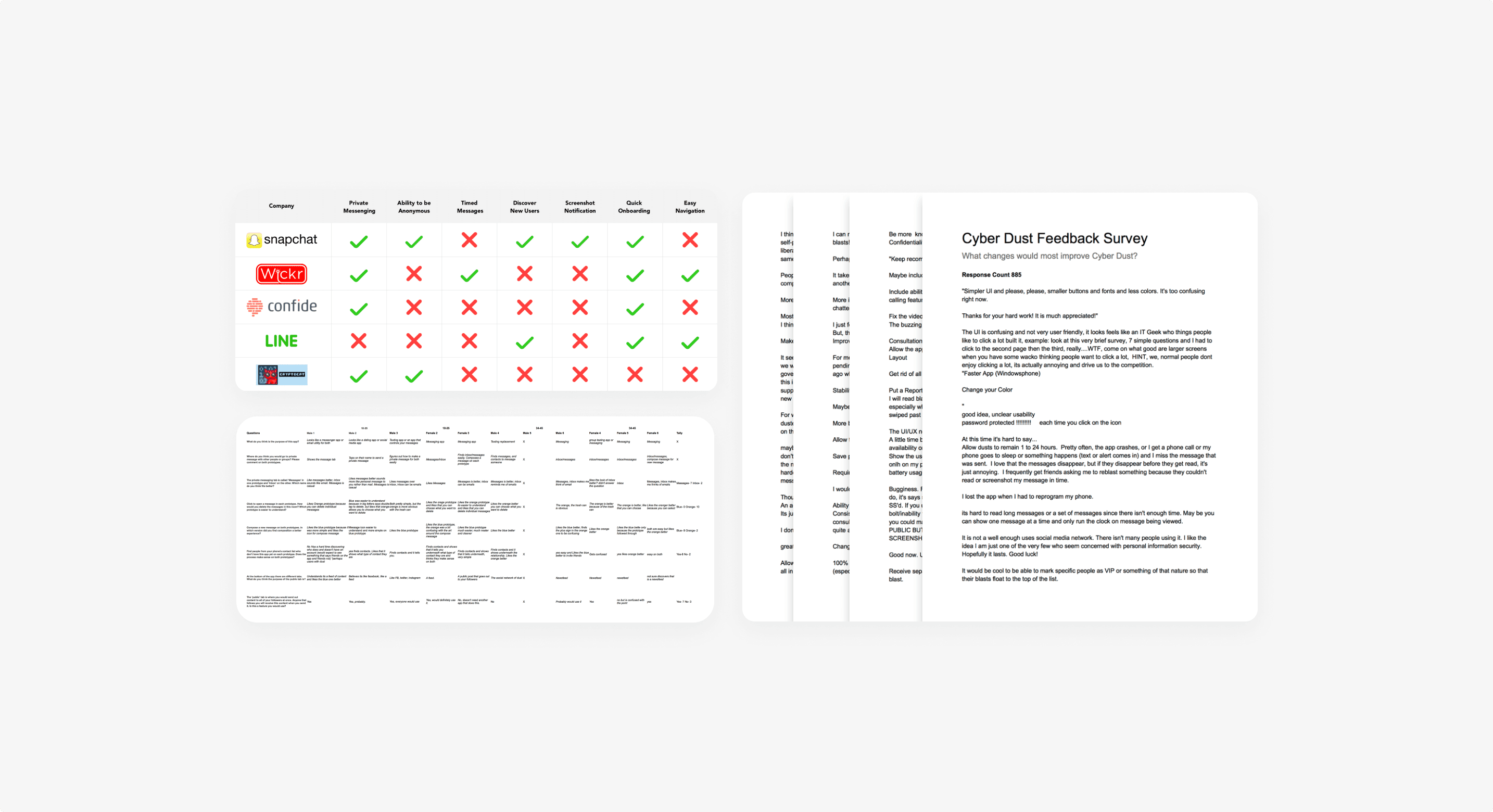
The research surfaced opportunities across the entire product, but we couldn't address everything at once. With an MVP launch in mind, I worked with the team to prioritize problems based on user impact and implementation effort.
We used a priority matrix to make tradeoffs visible and align the team around what mattered most. Rather than adding more features, we focused on reducing complexity and strengthening the core messaging experience. This meant taking a critical look at existing features—not just how they worked, but whether they belonged in the core experience at all.

Our goal wasn't simply to redesign the navigation. We first needed to simplify the product itself. We explored how Dust could be structured around its primary purpose: private messaging. Features that competed with this experience were reconsidered, while the navigation was redesigned to make messaging easier to find and access.
Mapping the ideal user journey helped us identify unnecessary steps, competing destinations, and opportunities to reduce clutter. The result was a more focused information architecture that made the app easier to understand and put private messaging back at the center of the experience. This shift became the foundation for redesigning the rest of the app, including onboarding and the disappearing message experience.

We tested the redesigned experience throughout the process, using each round of feedback to identify friction and refine the experience. A major focus was improving the core chat experience and simplifying the navigation so users could more easily find and send messages.
Because this was a full redesign of the mobile app, we also explored the visual identity alongside the product experience. I experimented with different color palettes to understand which directions felt most appropriate for a private messaging app, and explored a new logo to see whether a stronger visual identity could better communicate what Dust was and what it offered.
These iterations helped us refine not only how the app worked, but also how it felt and how quickly users could understand the product.

The redesigned app delivered measurable improvements in both acquisition and retention.
20% increase in downloads
7× increase in user retention
We also saw users sending more messages at a faster pace, suggesting that simplifying the experience made it easier for people to engage with Dust's core messaging functionality.